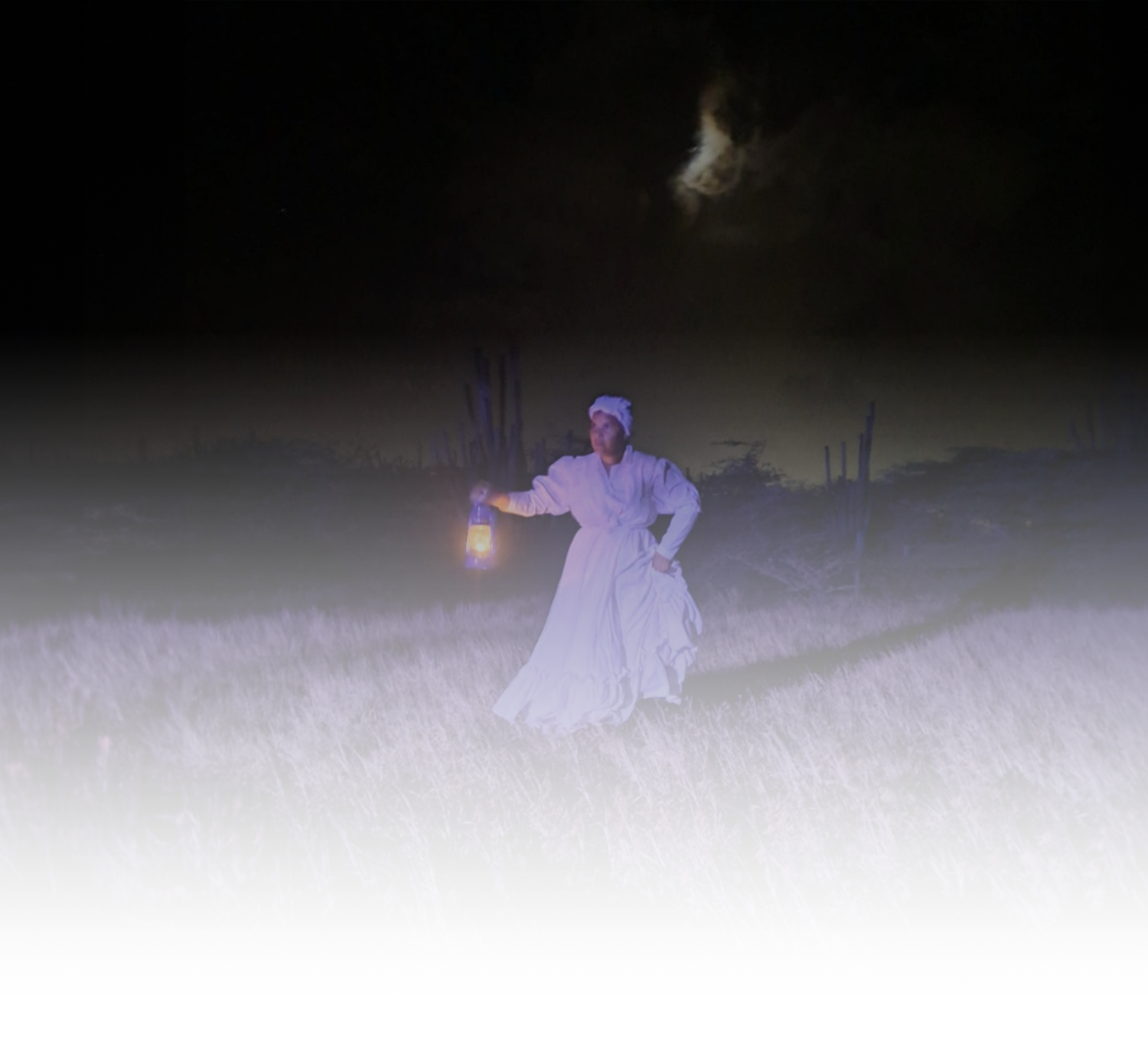
From Wesu
In 1858, an enslaved man named Thomas walked from the plantation Wesu to Fort Zoutman to file a complaint against his owner, Jan Pieter Croes.
According to the records, the dispute began the day before after Thomas arriveda half hour late for work. When confronted by his owner, Thomas argued that the six ears of corn he received were not enough to feed his family. What followed was an altercation that escalated into violence. The two men gave very different accounts of what had happened. Thomas claimed he had been struck by his owner. Croes maintained that Thomas had attacked him and that he had only acted in self-defense.
The complaint brought Thomas before the colonial authorities. After hearing the case, the colonial scriber sided with Jan Pieter Croes and instructed Thomas to apologize to his owner.
Thomas refused.
For that refusal, he received four lashes and was imprisoned at Fort Zoutman. Shortly afterwards, Father Paulus intervened on his behalf. In letters to the authorities, the priest described Thomas as a hardworking man who cared for his family. He also offered to purchase Thomas and allow him to repay the cost of his freedom over time. Jan Pieter Croes rejected the proposal. Instead, he demanded a much higher price for Thomas.
The records show that Thomas was subsequently placed aboard the Dutch bark Minerva. The intention was to remove him from Aruba and sell him in Curaçao. However, the sale never took place. Thomas eventually returned to Aruba, where he remained enslaved until the abolition of slavery in 1863.
Following emancipation, Thomas received the surname Krospaal. Later records show that he acquired a parcel of concession land known as Georgia, measuring nearly two bunder, in the area where Aruba's Department of Public Health stands today in Oranjestad.
Thomas's story survives through complaints, official correspondence, and the letters written on his behalf. Together, these records provide a rare glimpse into the life of an enslaved man whose words, family concerns, and struggle with his owner were preserved in the archives.
Explore the Archives
Additional documents and a detailed reconstruction of Thomas's life can be found through The Story of Thomas (1823–1881) – Coleccion Aruba .