From Socotoro
Today, thousands of people pass through the General Post Office in Oranjestad without realizing that the site was once home to Socotoro, a government-owned plantation that formed part of Aruba's nineteenth-century agricultural landscape.
Unlike many privately owned plantations, Socotoro was administered by the colonial government. According to historian Adi Martis, government plantations relied on a combination of enslaved labor and paid workers. By the late 1850s, records show men and women earning approximately 20 cents per day, often working five or six days a week. Their names—including Anna Tromp, Maria Holsman, Statius de Lange, Jan Hoeverts, and many others—were carefully recorded in weekly payroll lists, offering a rare glimpse into the people who worked the land.
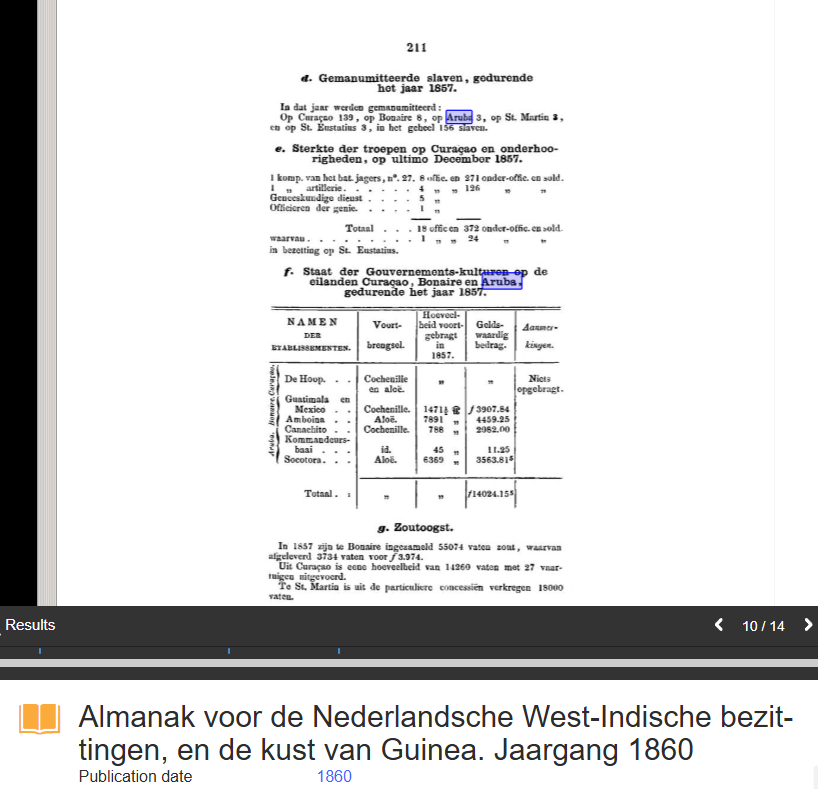
By 1857, Socotoro had become an active aloe-producing plantation. Official colonial reports recorded an annual production of 6,369 pounds of aloe, highlighting the crop's growing importance to the island's economy. While different crops were cultivated across government plantations in the Dutch Caribbean, aloe proved particularly well suited to Aruba's dry climate.
Today, the plantation itself has disappeared beneath modern development. The land that once produced aloe is now occupied by Aruba's General Post Office. Yet the history of Socotoro remains embedded in the landscape, reminding us that places often carry many lives within them.
Explore the sources This story was reconstructed using historical maps, plantation records, government reports, and archival documents preserved by the National Archives of Aruba and Coleccion Aruba.